Skip to content
Diaphanic

Guides · Search

How Google ranks a local business

Most owners are told that SEO is complicated and best left alone. The mechanism is simple enough to follow in five minutes, and knowing it makes you much harder to mislead.

The short version

  • Google can only show pages it has already read and understood.
  • For a local search it weighs relevance, distance and how well known you are.
  • Results come in three forms, the map, the links and AI answers, and each needs different work.

Updated November 2026 · 3 sections · 1 drawing

The picture

The whole thing, one step at a time.

The drawing plays through on its own. Pick a step to stop on it.

From a search to an enquiry

01 / 06

Step 01

Google reads your site first

Long before anyone searches, Google's crawler visits your pages and files what it understood in its index. A page it can't read, or can't make sense of, can never be shown.

What we do here

Clean HTML, a sitemap, structured data and fast pages, so every page is read and understood.

01

Three kinds of result, three sets of rules

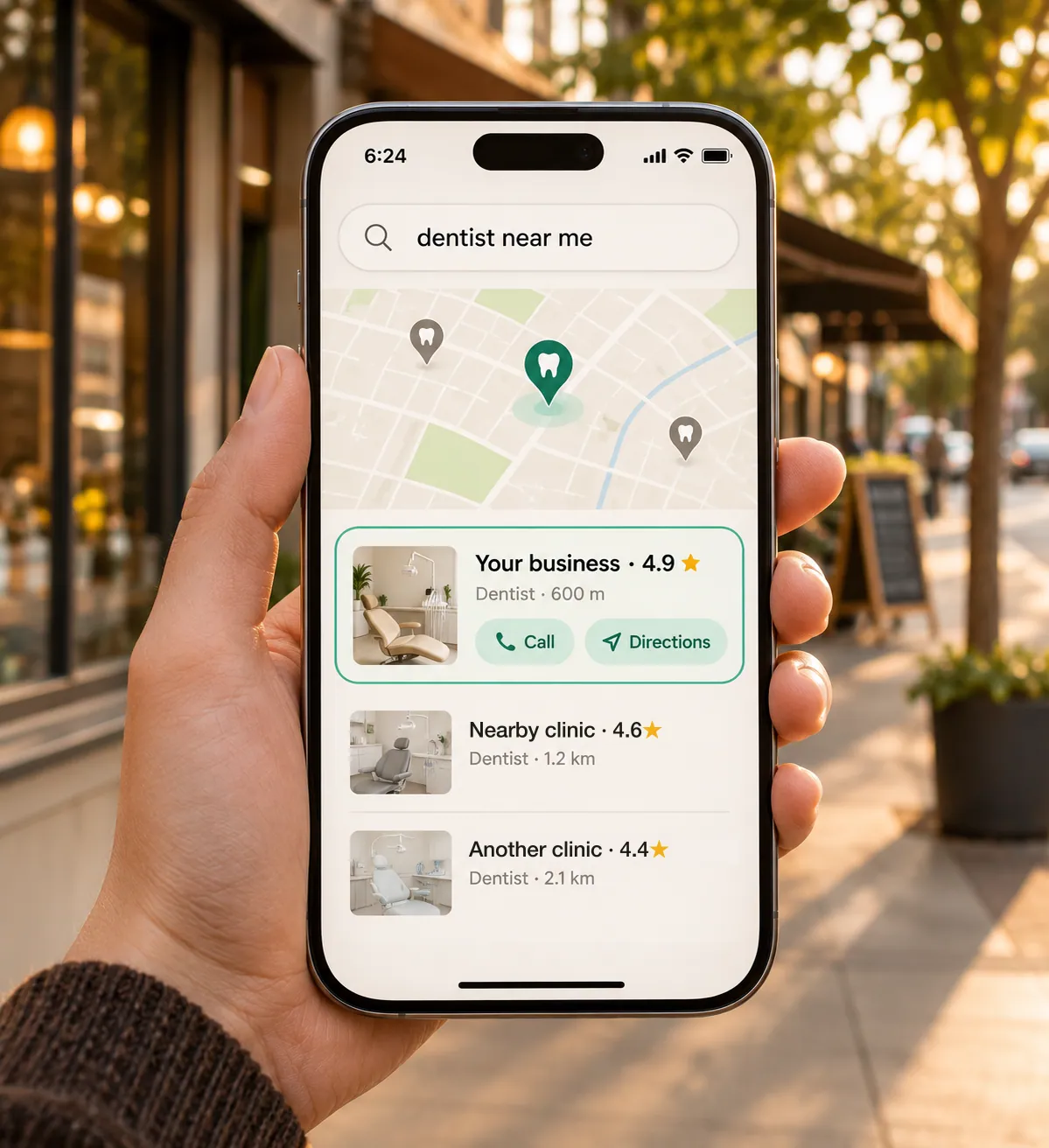
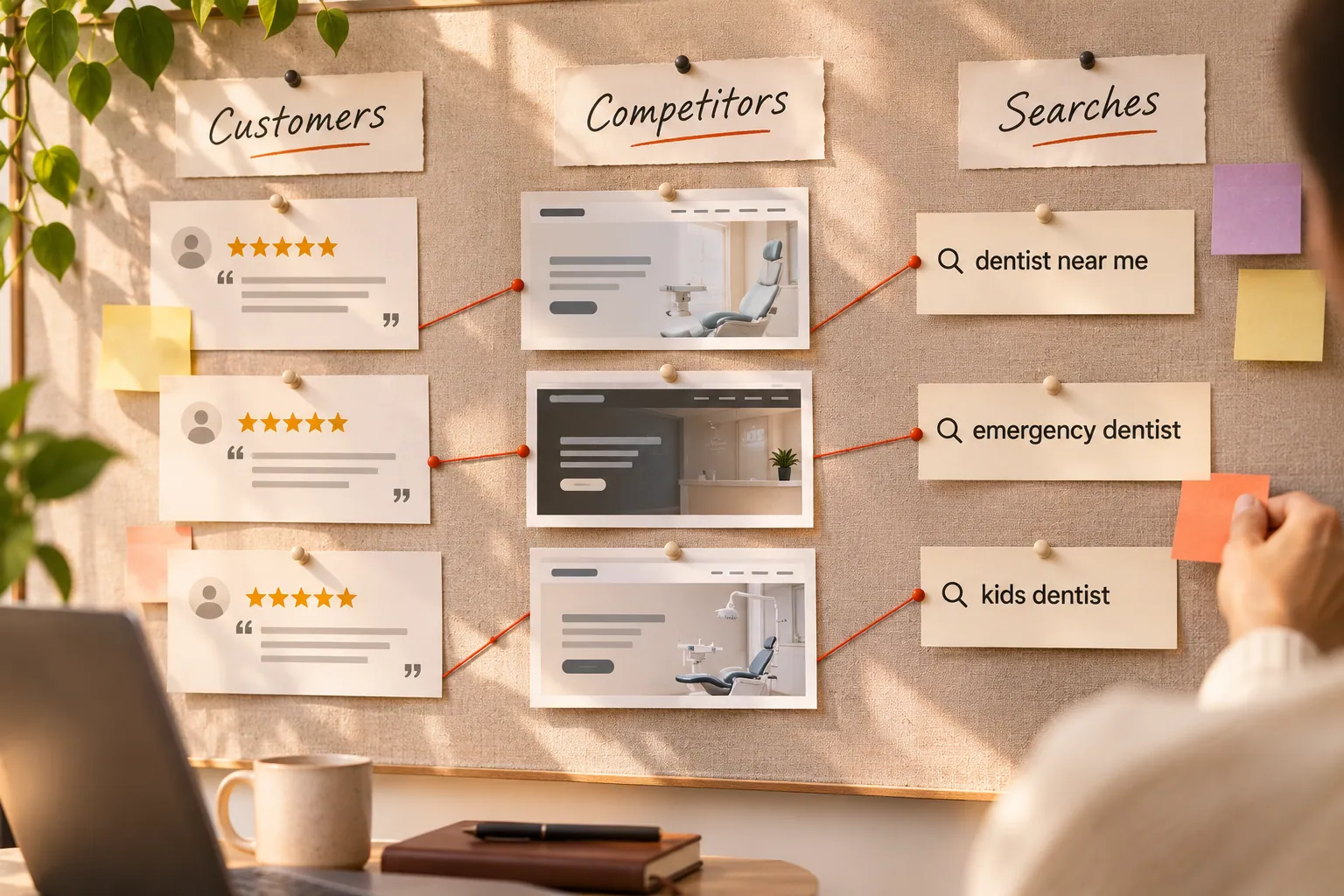
Search for a plumber and you'll usually see three things: a map with three businesses, a list of ordinary links, and increasingly a written answer produced by an AI model. They look like one page, but each is assembled from different evidence.

The map draws mainly on your Google Business Profile: your category, your address, your hours, your reviews and how close you are to the person searching. The list of links draws on your website. AI answers draw on whatever the model can find and check about you across the web.

That is why a business can sit at the top of the map and be nowhere in the links, or the reverse. Doing well in all three takes a profile, a website and a reputation that tell the same story.
02

What you can control, and what you can't

You can't control how far a customer is standing from your door, and you can't pay Google to move you up the unpaid results. Anyone who says they have a special relationship with Google is not telling the truth.

You can control whether Google can read your pages, whether each page answers one search well, whether your business details match everywhere they appear, and whether other trusted sites link to you. Those four things are most of the work.

The usual mistake is one page trying to rank for everything a business does. Google would sooner show a page about knockdown rebuilds to someone searching for a knockdown rebuild. One page, one search.

03

Why it takes months, not weeks

Google revisits pages on its own schedule, and it is slow to trust a change. A new page has to be found, read, compared with the pages already ranking, and watched for a while before it moves.

Links and reviews build slowly too, because they depend on other people. For a local business, map results and very specific searches tend to move first, and the broad, competitive searches later.

So the honest way to judge search work is by trend. You should see every tracked keyword each month, and watch the line, long before it turns into enquiries.

Words you'll hear

The jargon, translated.

Six terms a supplier is likely to use in the first meeting.

Index
Google's stored copy of the pages it has read. If a page isn't in it, it can't be shown.
Keyword
The words a customer types. Not the words you use about yourself.
Map pack
The three local businesses shown on a map above the ordinary results.
Backlink
A link to your site from someone else's. Google reads it as a vote of trust.
Structured data
Labels in a page's code that tell search engines what things are: a price, an address, a review.
Google Business Profile
Your free listing on Google Search and Maps. It feeds the map results.

Before you sign anything

Questions to ask any supplier.

Including us. A supplier who is comfortable with these is usually worth talking to.

Ask us
  1. 01Which search will each page target, and can I see the full list?
  2. 02How will you show me enquiries, and not only rankings?
  3. 03Where will the links come from, and can I see each one?
  4. 04Who will own the Google profile, the analytics and the website?
  5. 05What are you not able to promise?

Where we do this

Keep reading

More guides

Start a project

Tell us aboutyour business.

Send us what you do and what you want to achieve. You’ll get a clear reply within one working day — questions or a next step, not a sales deck.

Not ready for a project? Start with something free, and judge us on what comes back.

  • Reply within one working day
  • A fixed, written quote first
  • Australia · Canada · India
  • contact@diaphanic.com