Publisha: Case study · A publishing platform for Indian writers
A home for Indian writers, designed so people come back and built so search engines find every story.
- Product
- Our own publishing platform · since 2026
- Where
- India
- Services
- Research & strategy, Brand identity, Web apps, SaaS & marketplaces, AI integration, Local SEO, Social media & content
- Live site
- publisha.in
- Verified authors
- 700+Verified authors
- Stories published
- 1.9K+Stories published
- Topic pages
- 385Topic pages
- Researched stories every week
- 21Researched stories every week
The business
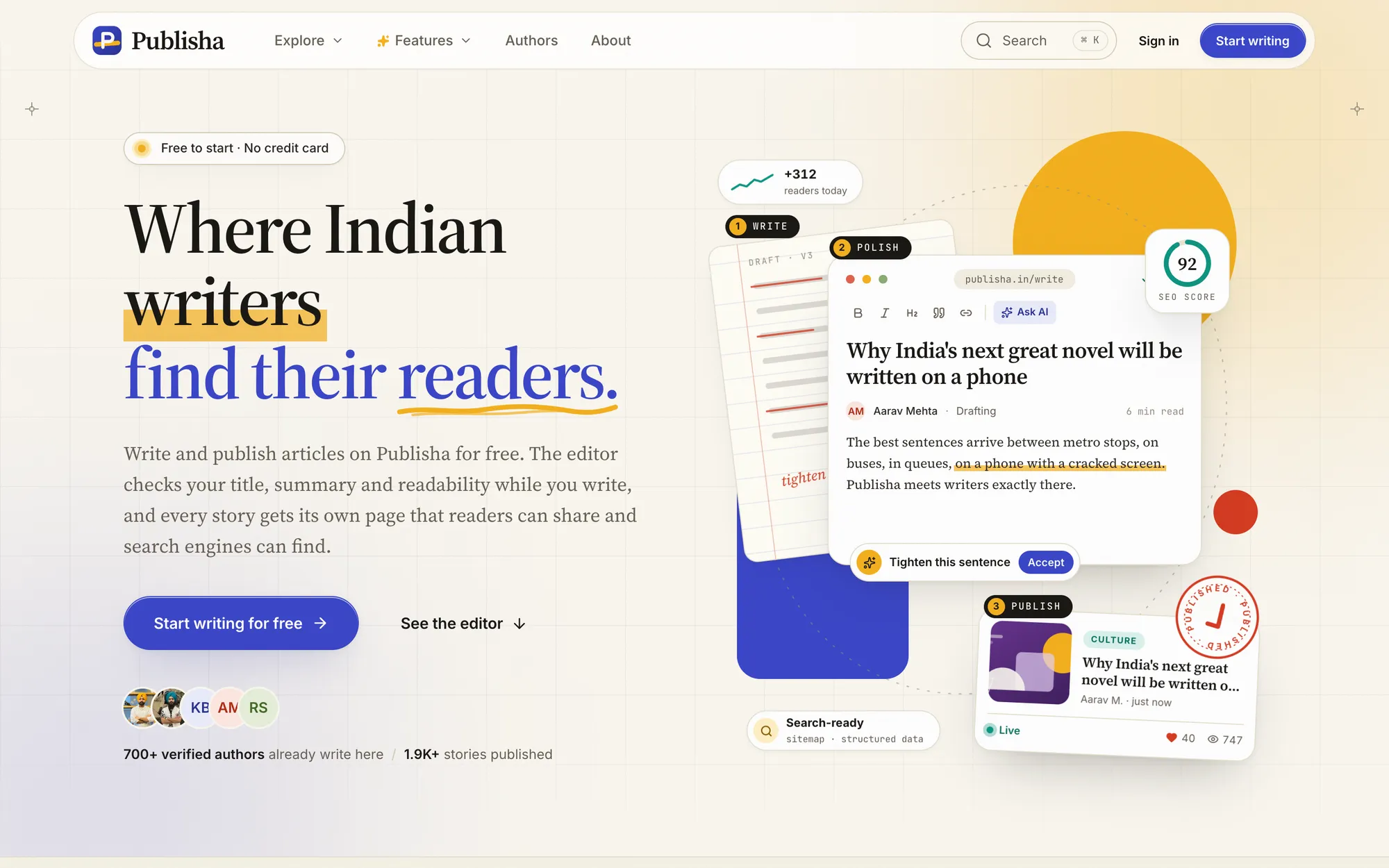
Publisha is our own publishing platform for Indian writers: write in English or Hindi, publish for free, and get a page that readers and search engines can find.
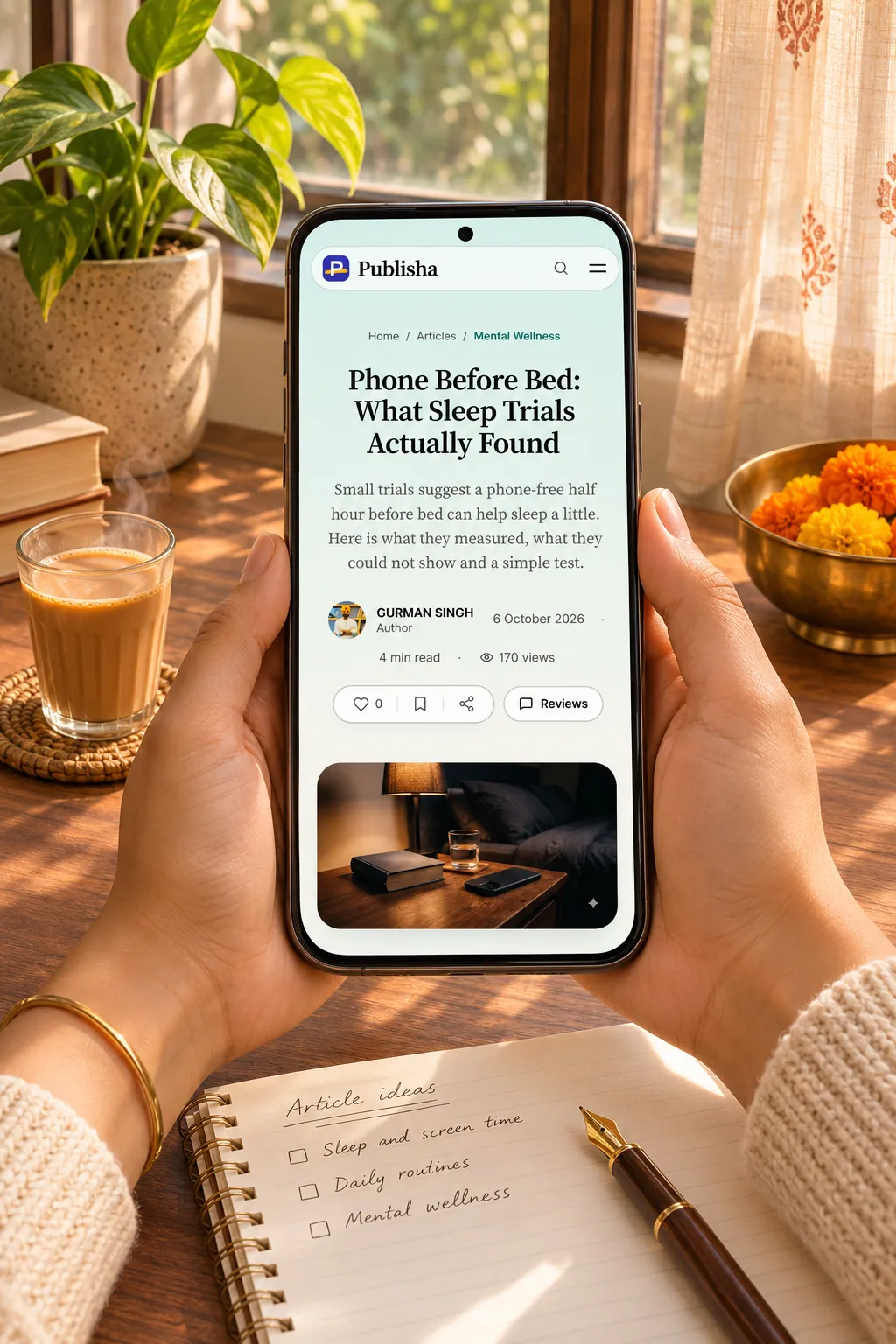
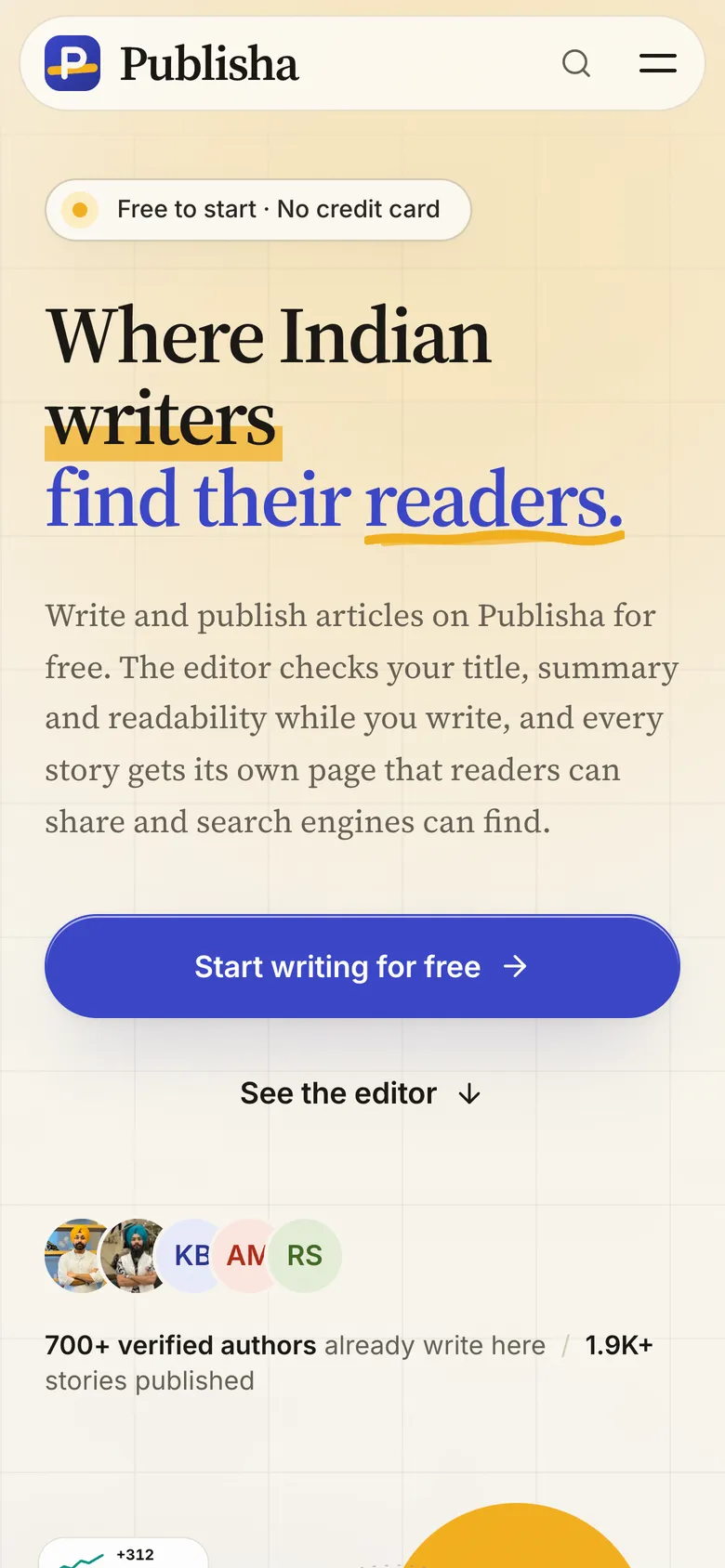
Writers in India write on phones as much as laptops, in English and Hindi, and usually to be found in search rather than sent to a mailing list. A platform for them starts with a problem most products never face: writers come for readers, readers come for stories, and on day one there are neither.
What success looks like for them
- Goal 1: Publish in minutes, free, from any phone
- Goal 2: Every story on a page search engines can find
- Goal 3: Readers find the next story and come back
- Goal 4: Writers keep writing, without being nagged
Who they need to reach
Two sides, and the platform only works when both are served: the people who write and the people who read.
- A · Segment
Independent writers and bloggers
More people reading their work, without running a website.
Worried about: Writing into the void
- B · Segment
Professionals and founders
A place to write about what they know, and one link to send people to.
Worried about: Hosting, domains and plugins
- C · Segment
Students and graduates
A free way to start building a name online, in English or Hindi.
Worried about: Cost and complexity
- D · Segment
Readers
Useful, recent answers to what they searched for, then the next story worth reading.
“advance tax by 15 December”
The insight that shaped the site
Most writers here want to be found in search, not to build a mailing list. So every decision starts with the page a stranger lands on.
The competition
We looked at where Indian writers publish today, and built for what those places leave out.
What we looked at
- 01Medium and Substack: built around paywalls, newsletters and mailing lists
- 02Hashnode and developer blogs: built for one kind of writer
- 03Blogger and self-hosted WordPress: hosting, themes and plugins to manage
- 04Social posts: reach that fades within days, and nothing to search
The gaps we found — and built the site around.
Built for search, not inboxes
Every story, writer and topic gets its own page, in the sitemap, with the structured data search engines read.
Built for India
English and Hindi, phone first, free to start, and paid plans in rupees through Razorpay.
Help while you write
SEO, readability and AI-pattern checks beside the editor, before a story goes out.
No empty shelves
A weekly content engine, so a reader's first search finds something worth reading. Every editorial story is labelled.
04The plan
Where Indian writers find their readers.
Pages, in order of priority
- 01An editor with checks, so a first story goes out well
- 02Story, writer and topic pages that search engines can read
- 03Free tools for what writers search for: AI checker, SEO checker, readability
- 04Reader features that bring people back: follow, reading list, For you
- 05A weekly content engine to fill every niche until writers do
No page promises a ranking. The site says plainly that what ranks is writing that answers the reader's question, and the editor helps with the basics that make that possible.
A decision the research made
Run a weekly content engine across 15 niches: 13 editorial profiles and two of our own team's accounts, so readers find something on day one. Every editorial story says, beside its byline, that it was researched and drafted with AI and reviewed by the Publisha team.
Brand & design
Ink, paper and marigold: a writer's desk, drawn as a design system.
Palette
- Paper#faf7f0
- Ink#1a1714
- Pen#3a46c8
- Marigold#f4b01e
- Red pen#d63b22
- Night#10122b
Type · Source Serif 4 + Inter
Where Indian writers find their readers.
- 1
Every colour is a tool on the desk
Paper is the page, ink the type, indigo the pen, marigold the highlighter. Vermilion is the editor's red pen, used only in small marks.
- 2
One serif for reading and headlines
Source Serif 4 has an optical-size axis, so it stays sturdy at 18px body and elegant at 80px headlines without loading two families.
- 3
Hindi as a first-class language
Devanagari falls back to matching Noto Serif and Sans faces, fetched only when a page contains Hindi.
The system, live
Five tools on a writer’s desk, and one rule for each.
The page · #faf7f0
Paper
Every surface. Warm, never pure white, so long reads are easy on the eyes.
The type · #1a1714
Ink
Headlines and body copy. Long-form text uses a softer ink so it doesn't glare.
Aa
What you can press · #3a46c8
Pen
Buttons, links and the one action that matters on each screen.
Start writingThe highlighter · #f4b01e
Marigold
What to look at: a key word, a streak, a score worth celebrating.
find their readers
The editor's mark · #d63b22
Red pen
Small marks only: a phrase to rewrite, a line that needs your words.
delve into rewrite
Pick its topic
Nothing to choose: a story without an image gets a cover from a hash of the story, and every topic gets its colour from a hash of its name. The same story always gets the same cover, on the server and in the browser, so nothing flickers. This one is cover 17 of 30, and Fitness is always moss.
A three-week walking plan
YouJust now · 5 min read
Source Serif 4 · English
Where Indian writers find their readers.
Noto Serif Devanagari · हिन्दी
जहाँ भारतीय लेखकों को उनके पाठक मिलते हैं।
Pages are paper. Feature stories and the footer turn to night: the navy and gold of the cover art, with every colour re-tuned to stay readable.
Engagement
People come back because the next story is worth it, not because the site nags them. The prompts that bring writers back live by strict rules.
Why readers come back
Why writers keep writing
The rules, acted out
Engagement without the dark patterns. Restraint, written into the code.
Simulated visit · shown at 2× speed
A writer arrives to read
Nothing happens. For the first seven seconds the page belongs to the story, and no request for prompts has even been sent.
- prompt per visit, at most
- 1prompt per visit, at mostA queue of prompts is a queue of reasons to leave.
- before it may appear
- 7 sbefore it may appearA reader who came to read gets to start reading.
- days of rest after each one
- 4–7days of rest after each oneEach prompt has its own cooldown.
- days of quiet after two dismissals
- 30days of quiet after two dismissalsBrushed aside twice means ‘not now’.
- prompts in the editor or the studio
- 0prompts in the editor or the studioThose pages already show the same information.
- off for good, from the prompt itself
- ∞off for good, from the prompt itselfAnd the choice is remembered.
The four prompts
Each one asks for a single thing, and only when it’s true.
Unfinished draftrests 4 days
Shows the draft as the writer left it: its cover, title and first lines, so it's recognisable at a glance.
Only for a draft left alone for two days, so work in progress is never called abandoned.
Finish your profilerests 5 days
Lists only what's missing, and the headline follows how close they are: one thing left reads differently from four.
Only once there's published work or the account is a day old. A bio before a first story is a form, not a profile.
Weeks runningrests 7 days
A record of what the writer has already done, shown once at each milestone.
From two weeks running, at each new length. It congratulates and never warns: no countdown, no ‘don't lose it’.
Write the next onerests 7 days
The hardest ask of the four, so it waits until there's nothing more useful to say.
Ranked last: only with no drafts open and nothing published for ten days.
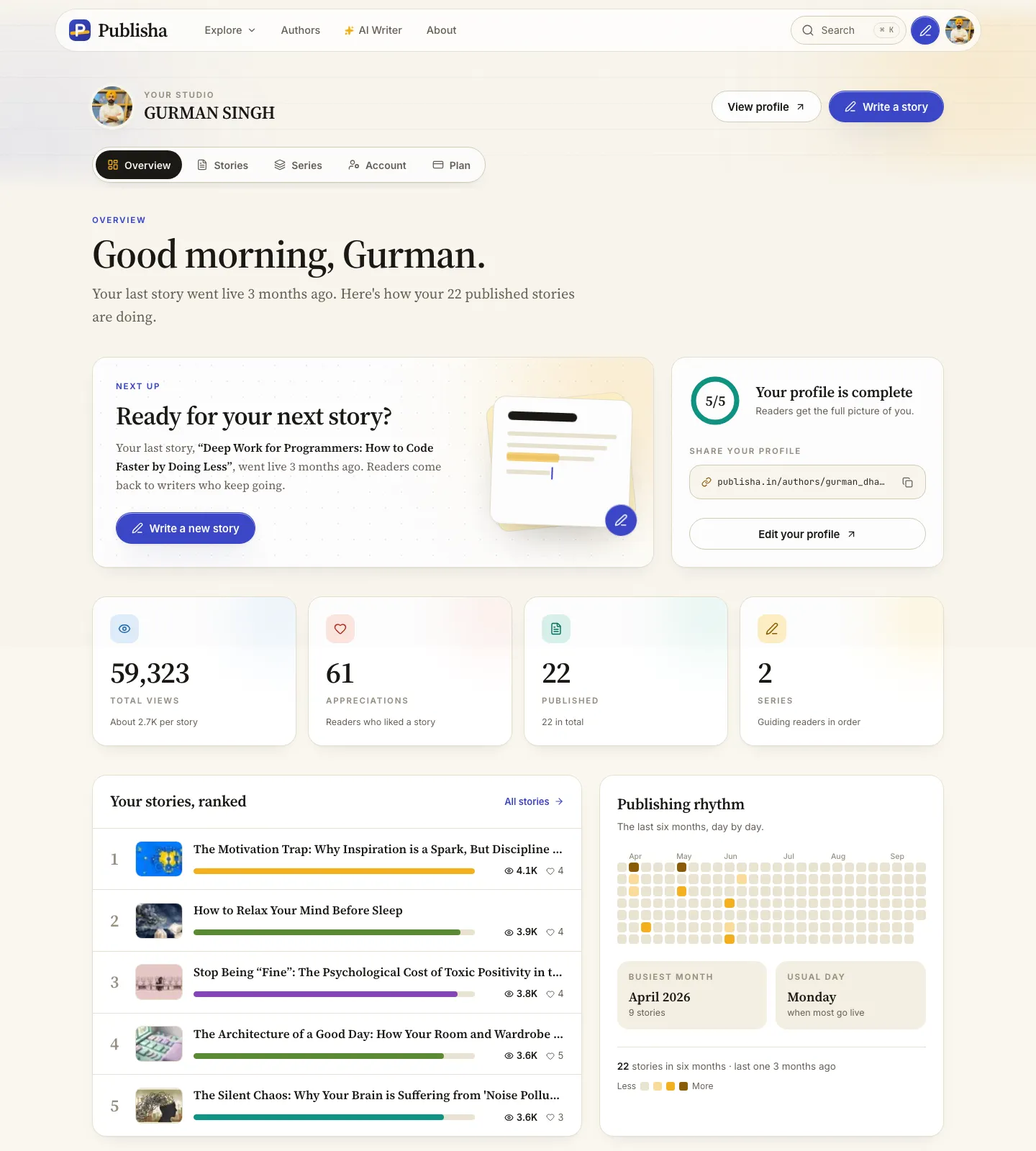
What the writer sees. The studio: views, appreciations, a ranked story list and a calendar of their publishing rhythm. The prompt to write again is part of the page here, so no pop-up repeats it.

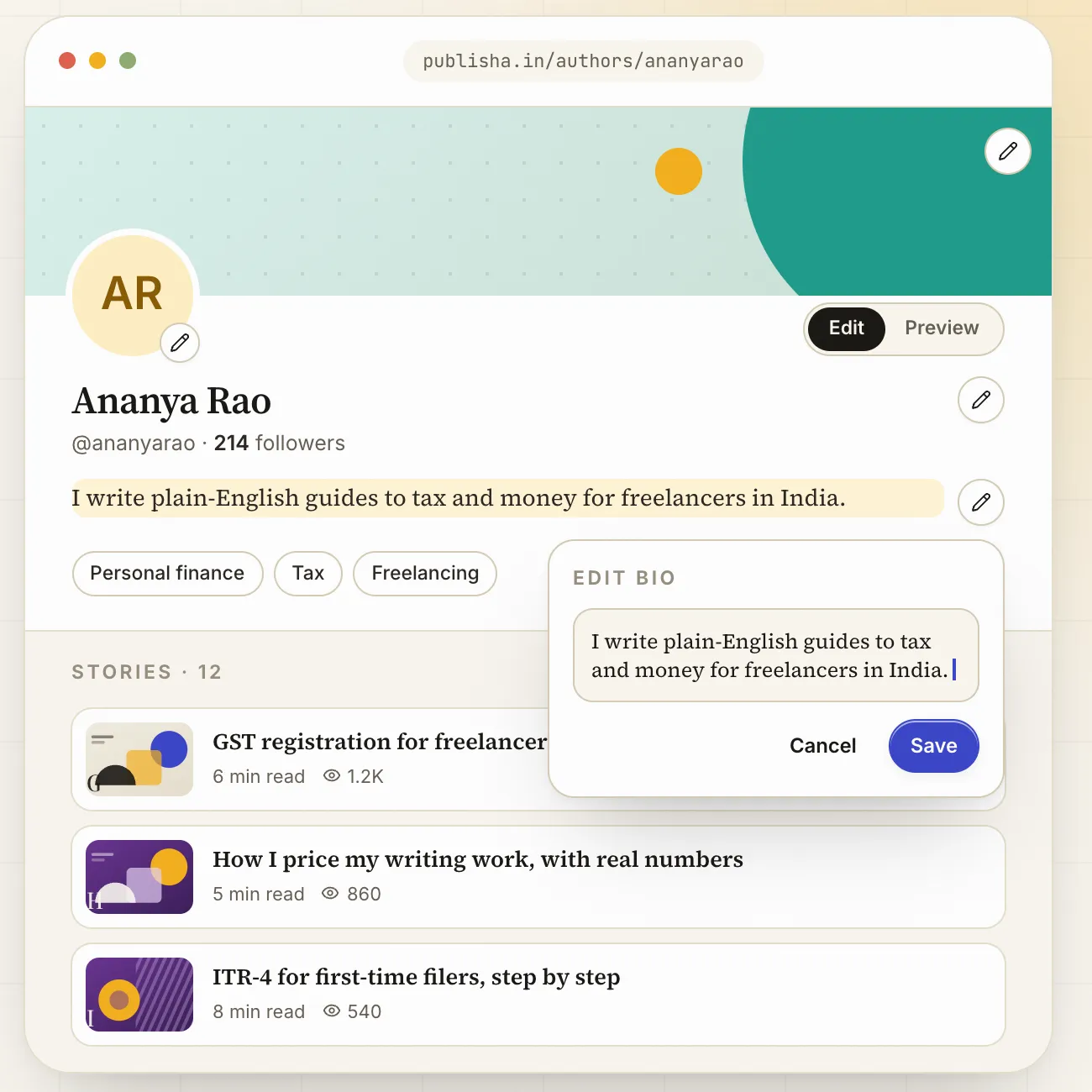
What readers see. Every writer gets a public page that works as a portfolio, with a follow button and their numbers in plain view.
The AI editor
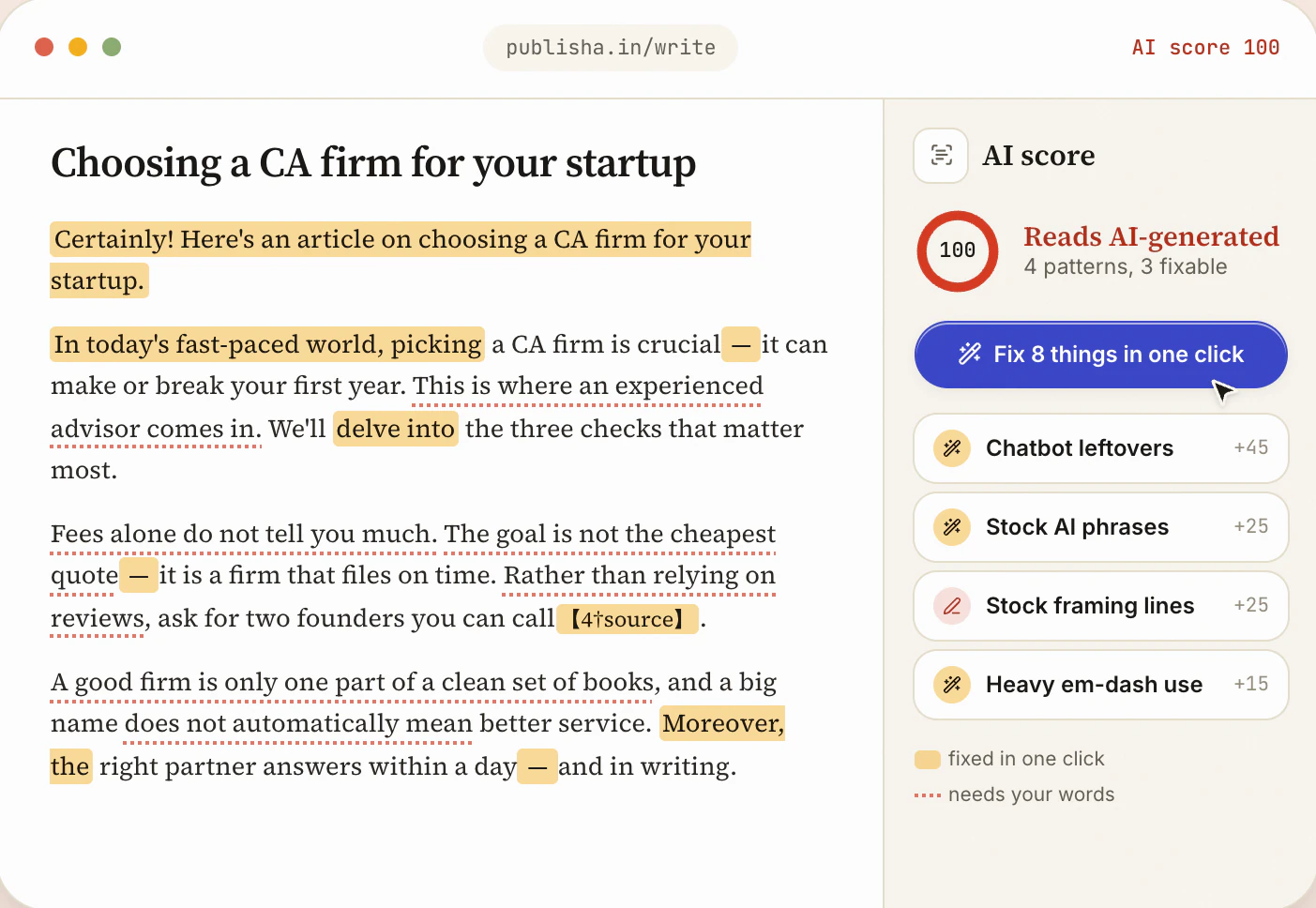
Text copied from a chat window carries marks readers notice. The editor finds them, fixes most in one click, and leaves the rest to the writer's own words.
Choosing a CA firm for your startup
In today's fast-paced world, picking a CA firm is crucial — it can make or break your first year. This is where an experienced advisor comes in. We'll delve into the three checks that matter most.
Fees alone do not tell you much. The goal is not the cheapest quote — it is a firm that files on time. Rather than relying on reviews, ask for two founders you can call.
A good firm is only one part of a clean set of books, and a big name does not automatically mean better service. Moreover, the right partner answers within a day — and in writing.
AI score
Reads AI-generated
4 patterns, 3 fixable
- Chatbot leftovers+45
- Stock AI phrases+25
- Stock framing lines+25
- Heavy em-dash use+15
fixed in one click
needs your words
The editor scores the pasted story 100 out of 100 and lists why: a chat window's opening line and source tag, stock phrases, em dashes and framing lines.
The editor scores the pasted story 100 out of 100 and lists why: a chat window's opening line and source tag, stock phrases, em dashes and framing lines.
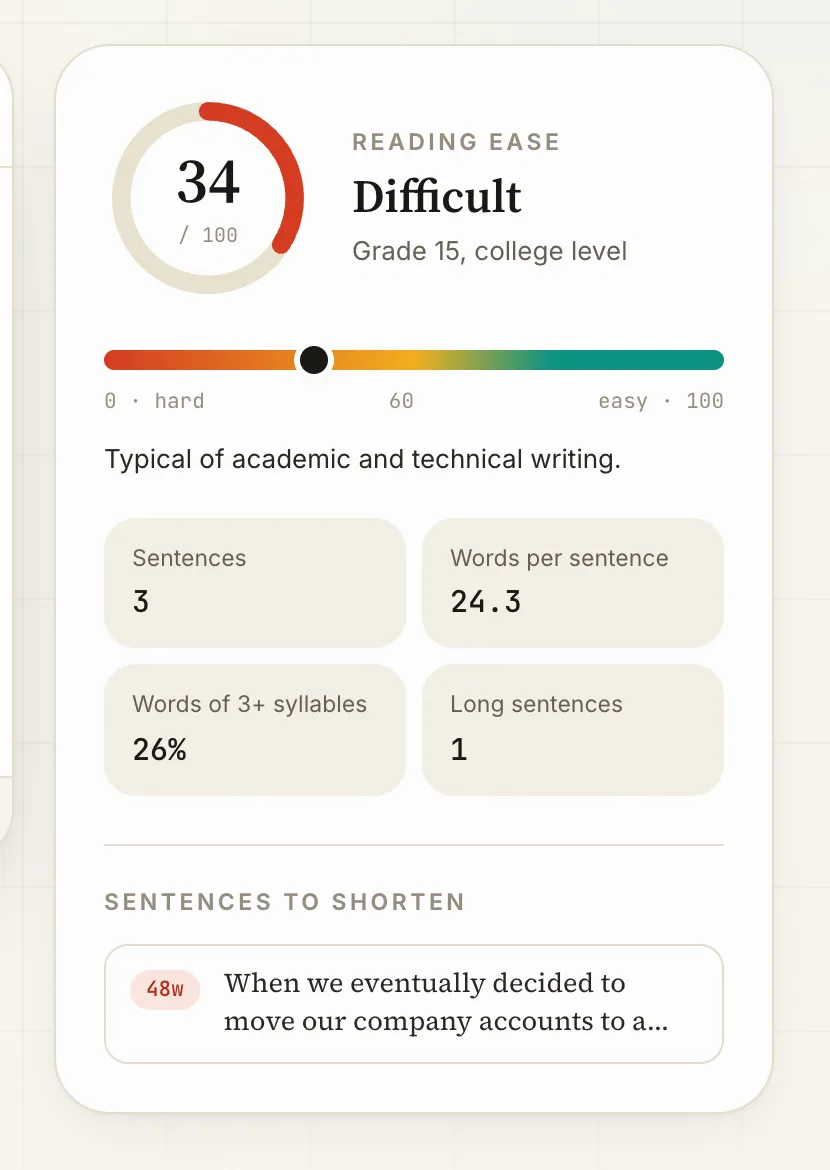
Readability, scored
A reading-ease score, the school grade the text reads at and the sentences to shorten. Beside the page as they write, and free for anyone as a tool.
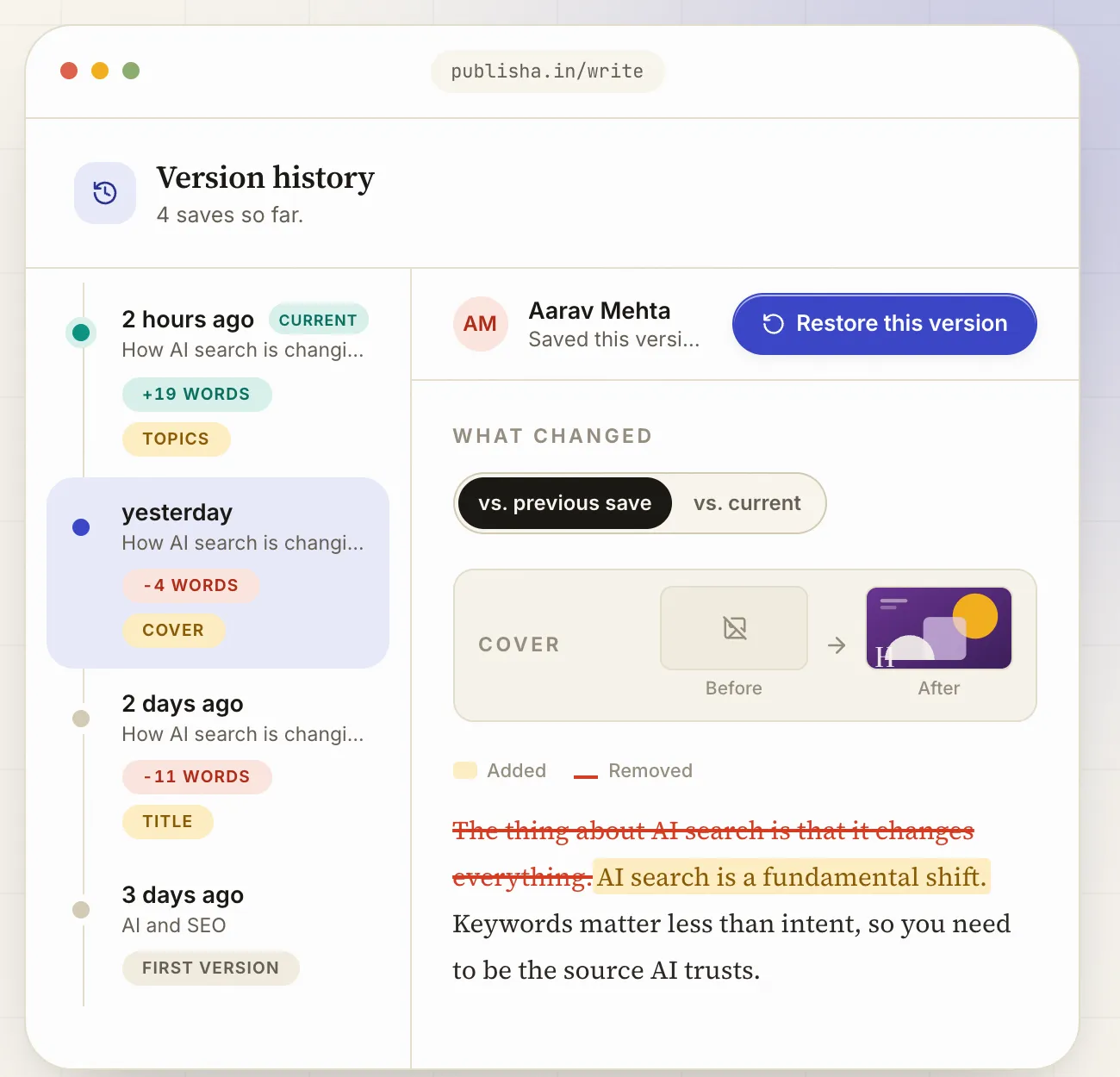
Version history
Every save is kept. Writers see what changed, word by word, and can bring back an earlier version.
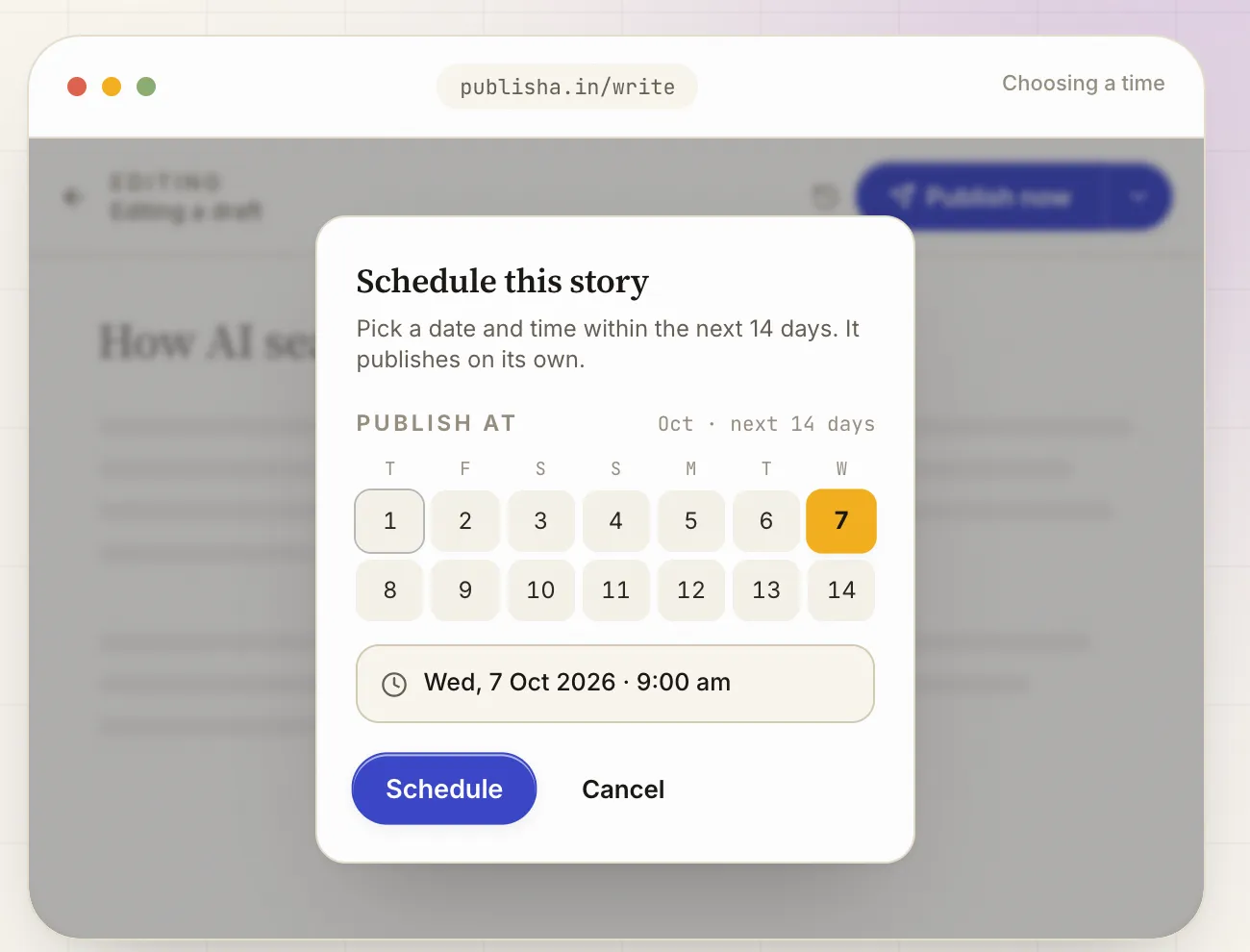
Scheduled publishing
Finish when there's time, pick when it goes out: up to 14 days ahead, in the writer's own time zone.
Built to be found
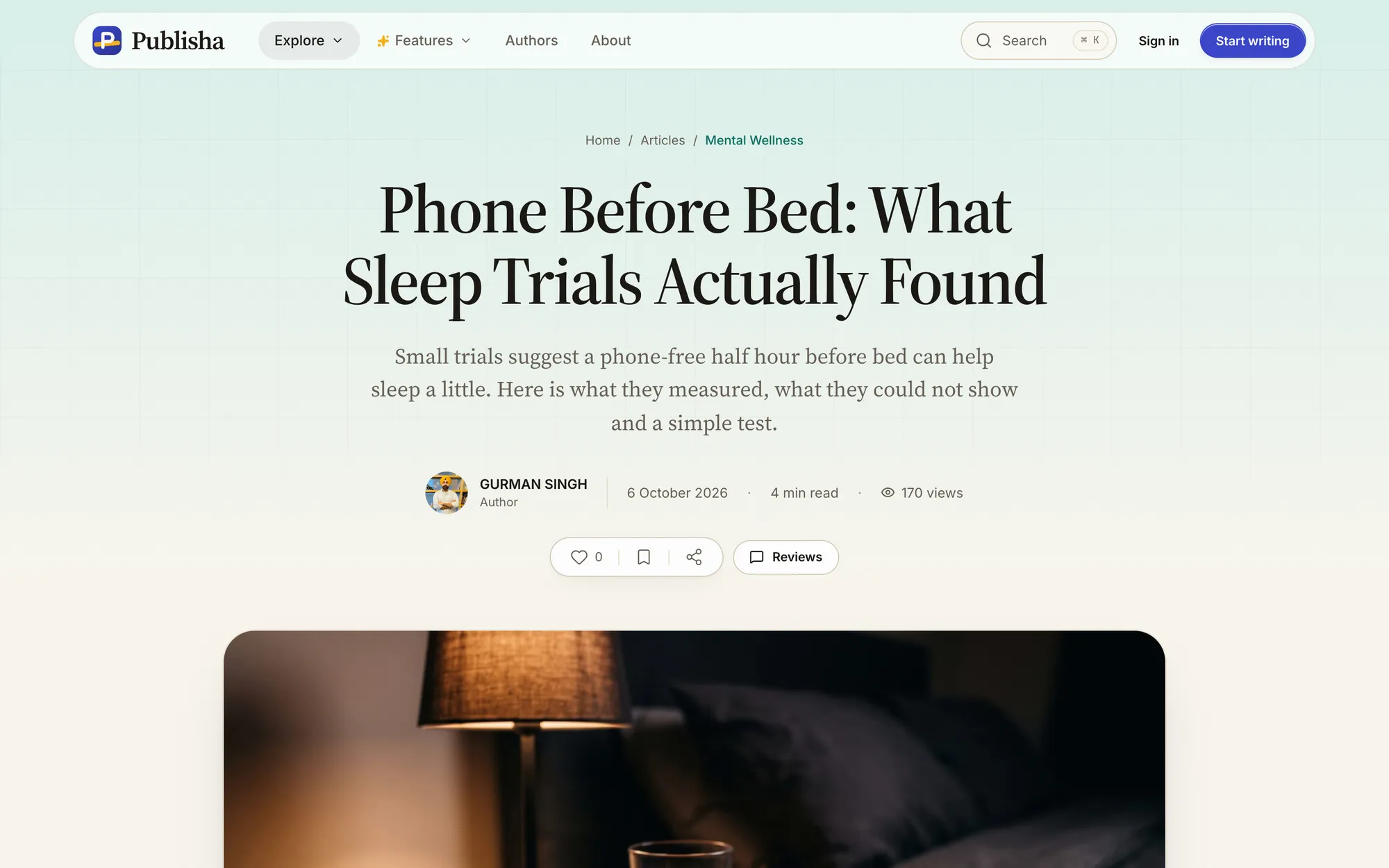
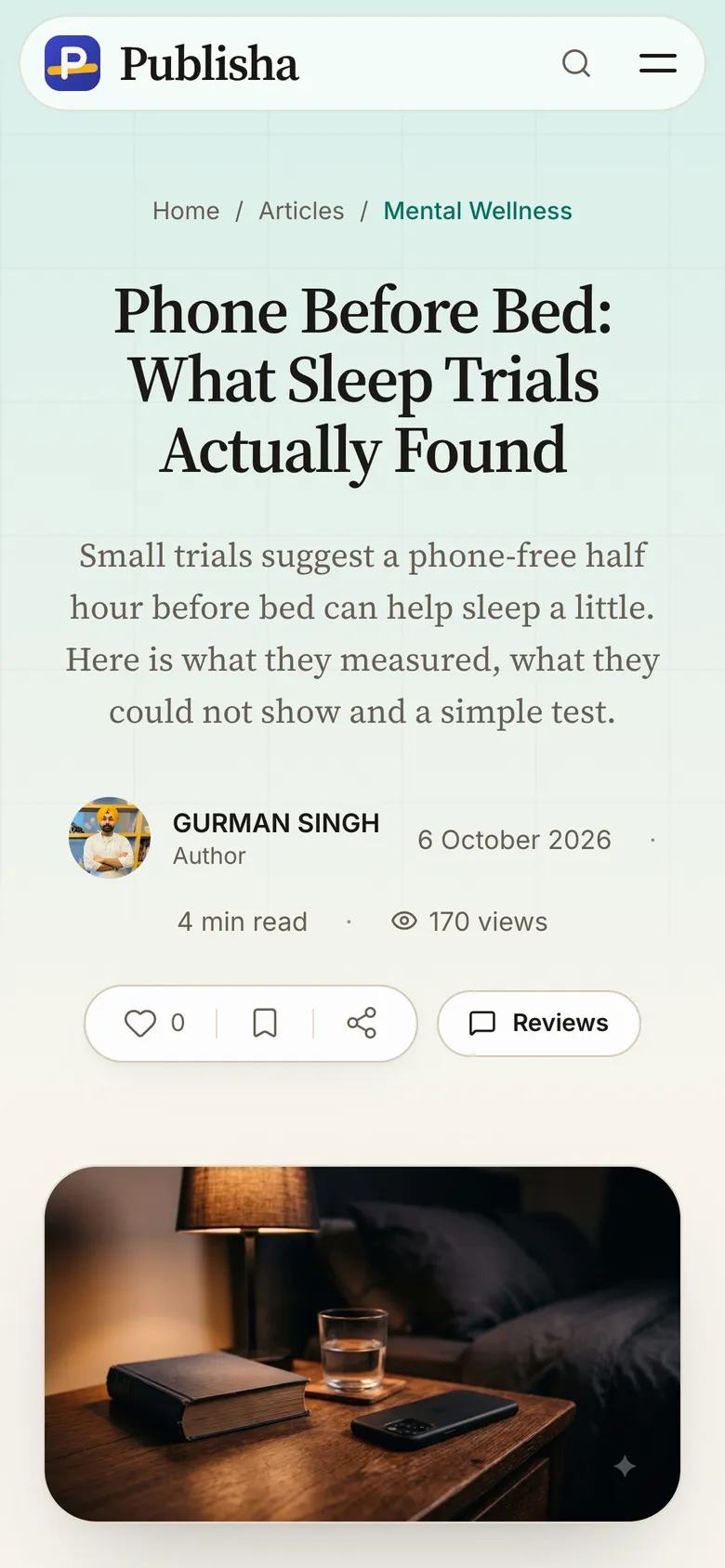
Every story, writer and topic is a page of its own, with its words in the HTML from the first byte, so search engines read it as well as people do.
- Story pages
- 1,964Story pagesArticle schema, breadcrumbs, a share card and related stories to read next
- Writer pages
- 748Writer pagesProfile schema, every story the writer published, their links
- Topic pages
- 385Topic pagesA landing page per topic, listing its stories
- Free tools and feature pages
- 8Free tools and feature pagesWritten for what writers search for, with FAQ and how-to schema
Counted from publisha.in’s sitemap on 26 November 2026.
On every page
- A sitemap that lists every live story, writer and topic
- Server-rendered pages: the words are in the HTML, not loaded later
- llms.txt, so AI assistants can read what the site is
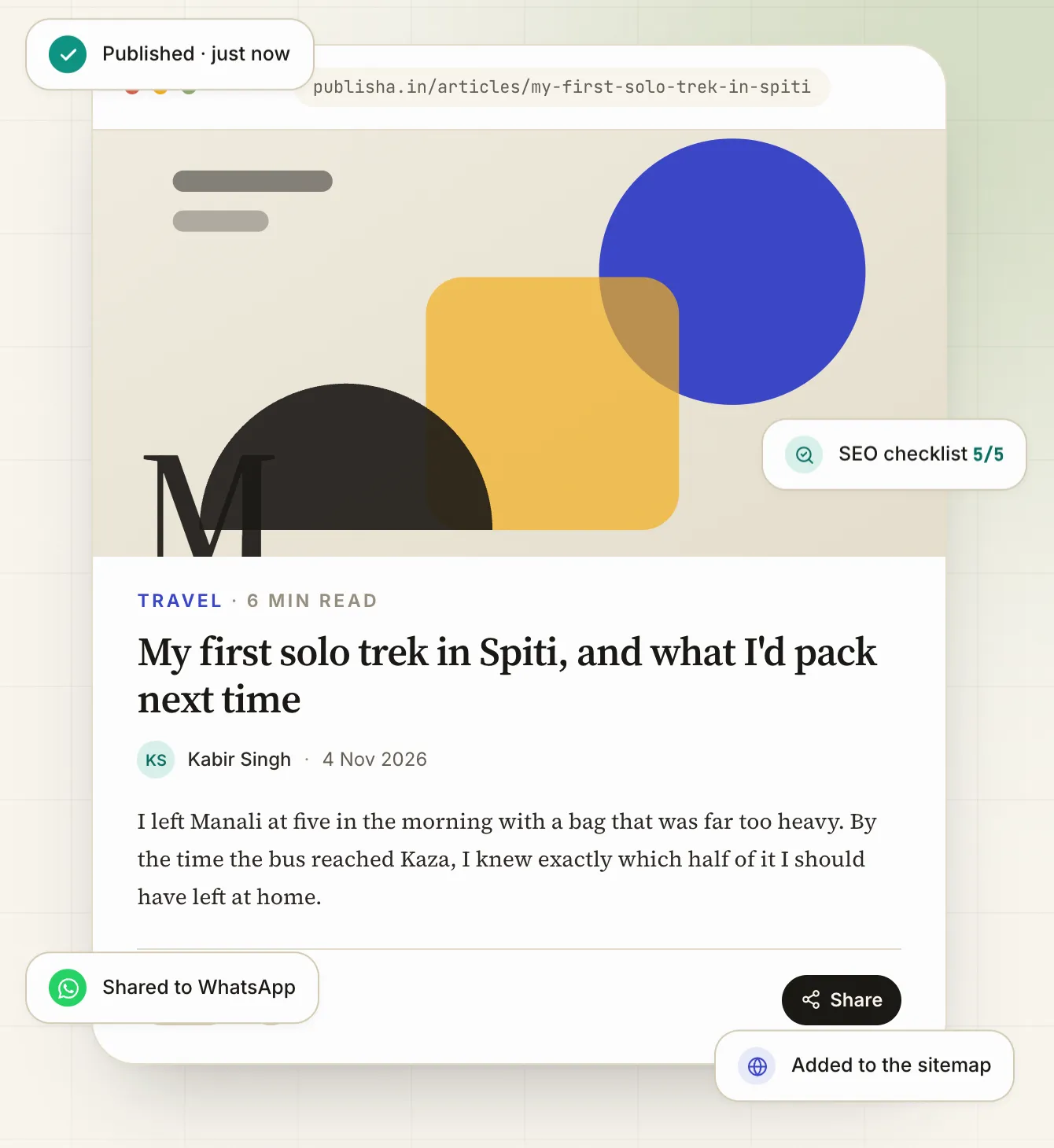
- Rich previews on WhatsApp, LinkedIn and X: title, summary and cover
What we built
Product, design, engineering and growth, all built and run in-house.
- 01
A writing editor with SEO, readability and AI-pattern checks beside the page
- 02
One-click fixes for AI tells, plus an AI assistant for outlines, reviews and summaries on paid plans
- 03
Version history for every save, and scheduled publishing up to 14 days ahead
- 04
Story, writer, topic and collection pages, server-rendered with structured data
- 05
Reader features: follow writers and topics, a reading list, For you, trending and series
- 06
A writer's studio: views, appreciations, a ranked story list and a publishing calendar
- 07
Prompts that bring writers back, with strict rules about when they may appear
- 08
Moderation, story reports and an admin panel
- 09
Plans and payments through Razorpay, plus onboarding and draft-reminder emails
Stack
- Next.js 16
- React 19
- Tiptap
- Tailwind CSS
- Framer Motion
- Express 5
- MySQL
- AWS S3
- Firebase Auth
- Razorpay
- Gemini API

Under the hood · for technical readers
One API behind the site, the studio and the admin panel. Follow one story through it.
How a story moves through Publisha
Step 01
A writer opens the editor
They sign in with Google or a code sent to their email and start writing, on a phone or a laptop. Every draft saves itself, and every save is kept as a version.
How we built it
Firebase sign-in, autosave and version history, so nothing a writer types is ever lost.
The content engine
An empty platform helps no one. Until writers fill every niche, a weekly content engine publishes 21 researched stories across 15 of them.
- niches, one profile each
- 15niches, one profile each
- stories a week, three a day
- 21stories a week, three a day
- real sources behind every story
- 3+real sources behind every story
- running every week since, in 2026
- 28 Seprunning every week since, in 2026
Every Sunday
Five steps, from what people are searching to a story going live.
- 1
Plan the week
A script snapshots the 15 profiles, picks 21 publishing slots and lists the live stories each new one can link to.
- 2
Research what's live
For every slot: what people in that niche are searching this week. News, deadlines, seasons, real questions.
- 3
Write and verify
900–1,500 words in the profile's own voice. Every fact traced to at least three sources that were actually read.
- 4
Validate
A validator rejects thin pieces, machine-writing tells, broken internal links and anything outside the editor's format.
- 5
Schedule
Stories and cover images go in as scheduled. The platform's own scheduler publishes each one at its slot.
The rules every story follows
- At least three real sources per story
- No invented experience, quotes, figures or credentials
- Health, money and legal topics stick to official sources
- 2–4 links to related live stories, in the sentence
- Editorial profiles' stories say, beside the byline, that they were drafted with AI and reviewed by the team
How readers are told, beside the byline
Advance Tax by 15 December: Do Salaried People Need to Pay?
Researched and drafted with AI and reviewed by the Publisha team.
Thirteen of the fifteen profiles are Publisha editorial profiles and carry this note on every story and on the profile. The other two are our own team’s accounts.
One real week
23–29 November 2026: 21 stories, each tied to something people searched that week.
Mon
E-commerce & D2C08:53
Claim Missed GST Input Credit for FY 2025-26 by 30 November
Cybersecurity12:28
eMudhra emBridge Flaw: What DSC Users Should Update Now
Blogging19:43
Google's November 2026 Core Update: What Bloggers Should Do
Tue
Design & UI/UX09:33
Figma Motion's Physics Springs: When to Use Them Over Easing
Travel12:39
Goa for New Year 2026? The Beach Rules and Fines to Know
Creators20:39
Meesho Joins YouTube Shopping: Can Small Creators Earn?
Wed
Freelancing08:19
Upwork's AI Work Is Up 55% While Total Spend Fell. What Now?
Data & analytics12:50
How to Read India's Q2 GDP Numbers on 30 November
Fitness19:26
Preparing for the Sabarimala Climb: A Three-Week Walking Plan
Thu
Startups09:14
Razorpay's IPO at a Lower Valuation: What Founders Can Learn
Mobile apps12:51
CocoaPods Goes Read-Only on 2 December: What App Teams Must Do
Web development20:33
Chrome 158 Ships the HTML Install Element: How to Use It
Fri
Creators09:10
ASCI's AI Labelling Rules for Ads: What Creators Must Disclose
Mental wellness13:03
Board Exams From 16 February: How to Space Your Revision
Personal finance19:23
Advance Tax by 15 December: Do Salaried People Need to Pay?
Sat
Careers08:02
CAT 2026 on 29 November: An Exam-Day Checklist
Fitness13:32
Cardio or Weights for BP and Diabetes? Reading a New Review
Design & UI/UX20:08
Designing a Cancel Flow That Isn't a Subscription Trap
Sun
Cybersecurity07:31
Fake Invoice Files on WhatsApp Desktop: How the Malware Works
Web development14:12
XSLT No Longer Works in Chrome: Find and Fix Affected Pages
Blogging19:58
Google Search Profiles in India: Can Bloggers Get One?
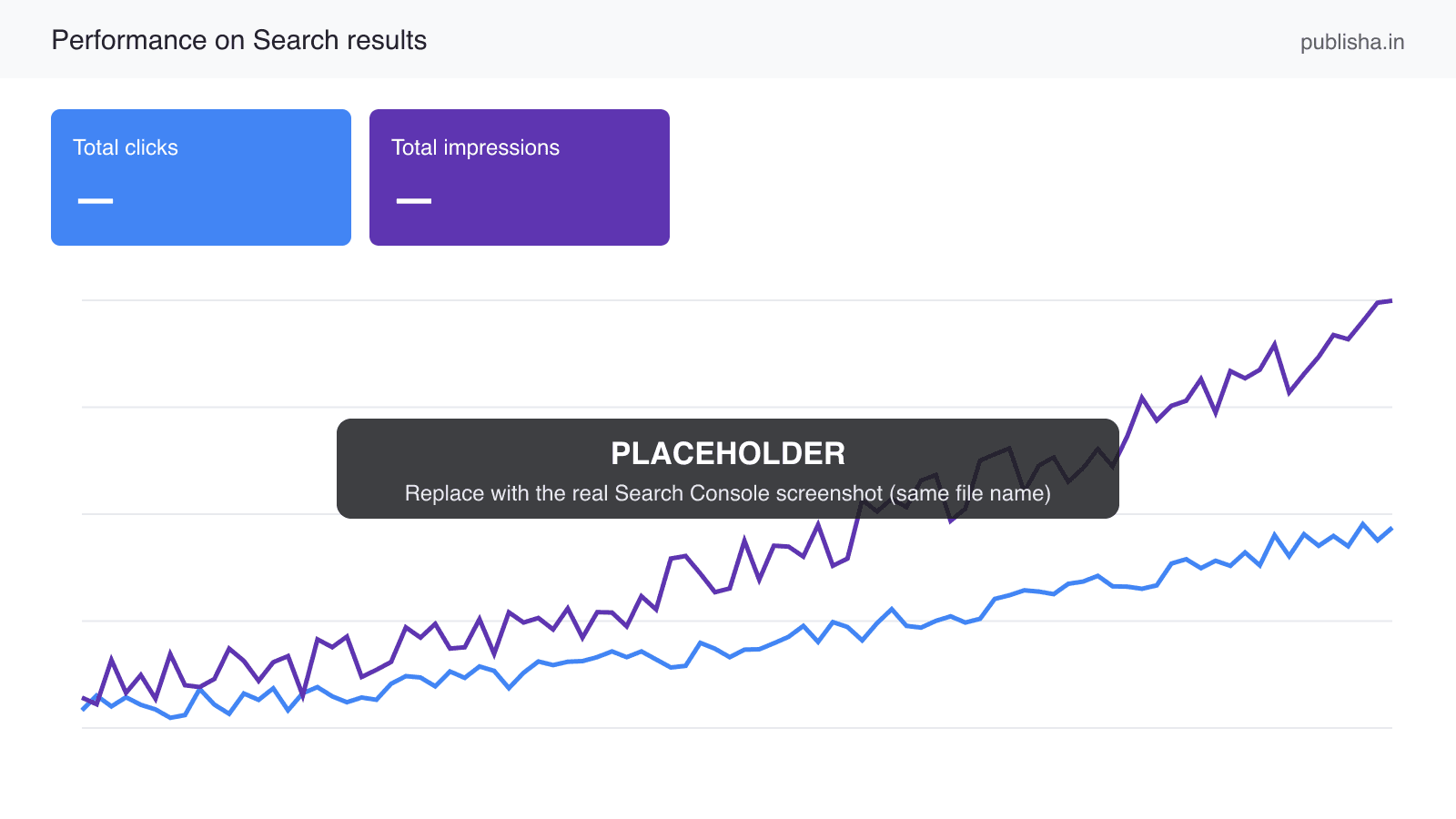
Search results
Search Console is Google's own record of how often a site appears in search, and how often people click. Here is what it shows.
Google Search impressions every month
Every story, writer and topic on its own server-rendered page, plus 21 researched stories a week.
Source: Google Search Console
12Results so far
Where it standstoday.
- Verified authors
- 700+Verified authors
- Stories published
- 1.9K+Stories published
- Topic pages, each one a landing page
- 385Topic pages, each one a landing page
- Researched stories a week, across 15 niches
- 21Researched stories a week, across 15 niches
- Views on our founder's 32 stories, as his public profile shows
- 15.3KViews on our founder's 32 stories, as his public profile shows
- Free tools and feature pages written for real searches
- 8Free tools and feature pages written for real searches
Author and story counts are the figures publisha.in shows today (November 2026). They include the content engine's 15 profiles and their stories.
For your business
What this means for a business like yours
- 1
We've taken our own product from an empty page to hundreds of writers, so we plan your launch for the cold start, not just the build.
- 2
Engagement can be designed with restraint: one well-timed prompt beats five that people learn to ignore.
- 3
Search is a product feature. Every page we build is meant to be found, read and shared.
Next growth story

Start a project
Tell us aboutyour business.
Send us what you do and what you want to achieve. You’ll get a clear reply within one working day — questions or a next step, not a sales deck.
Not ready for a project? Start with something free, and judge us on what comes back.
- Reply within one working day
- A fixed, written quote first
- Australia · Canada · India
- contact@diaphanic.com